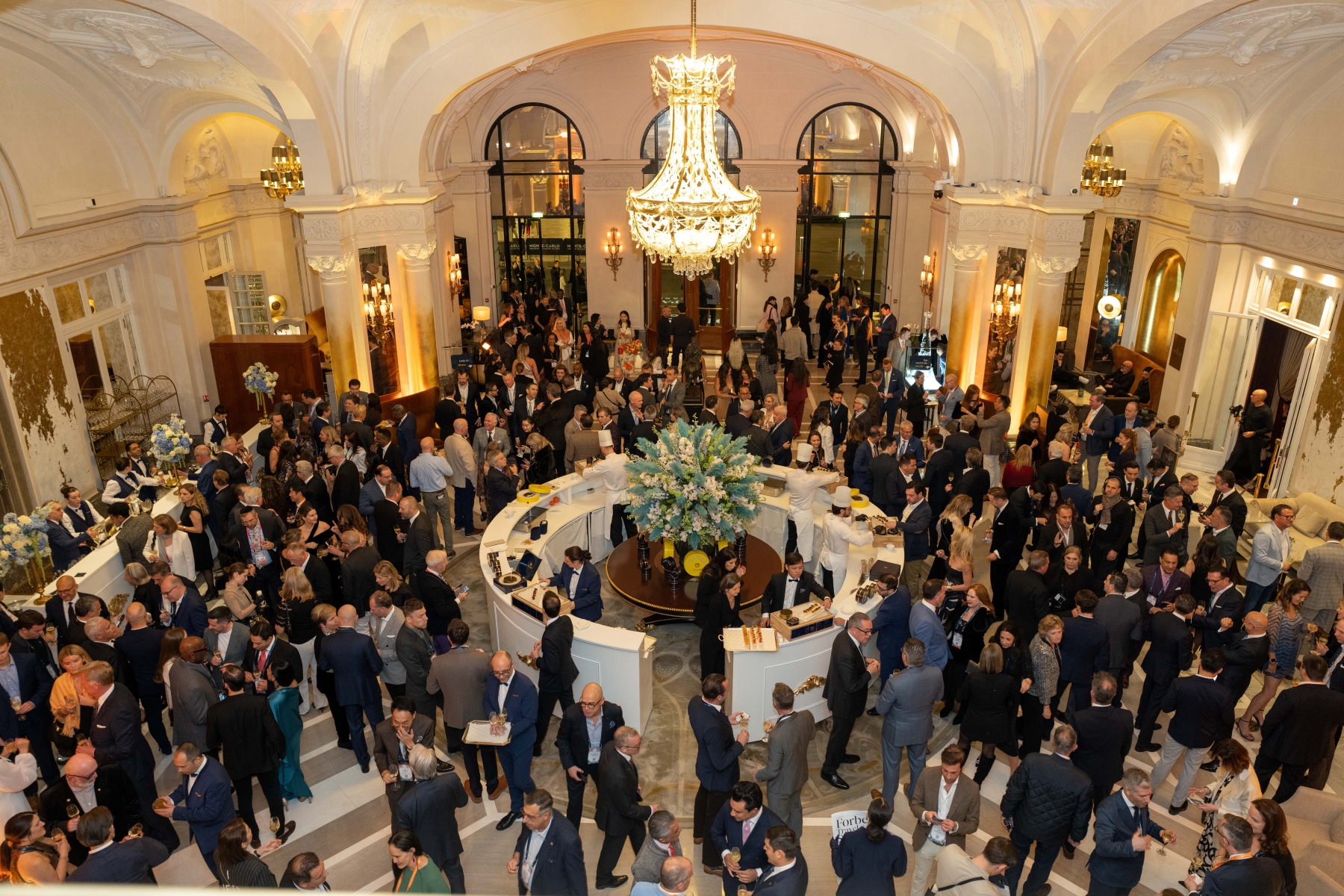
Leading luxury travel professionals from 100+ countries descended on Monaco for the Forbes Travel Guide Summit this week.
Hosted by the creator of the world’s only five-star hospitality awards, the by-invitation-only event boasts expert-led sessions, curated networking and the best of hospitality. It has previously been dubbed the most glamorous and thought-provoking luxury travel conference in the world.
“This is the Oscars of hospitality. You see the best of the best here. When you bring this kind of talent together, it’s a perfect environment with education, recognition, and so much more. It truly is the Oscars of what we do,” said Chris Gabaldon, CEO of Moët Hennessy North America and former senior vice president, luxury brands and operations at Marriott International.
Held in Monte-Carlo, the luxury capital of the world, The Summit provides deep insight and strategies for success in the ever-evolving industry of luxury travel and hospitality. It represents 150+ luxury brands, including the best five-star brands in hospitality and some of the most influential travel professionals globally.

Influential speakers included: Jeff Arnold, chairman of Forbes Travel Guide; Ali Furman Partner and U.S. Consumer Markets Industry Leader at PwC, rising F1 Academy star Alba Larsen; Brian Kelly, founder of The Points Guy; Hendrik Malinowski, Managing Director of Bugatti; Shannon McCallum, Vice President of Hotel Operations at Resorts World Las Vegas; Joyce Green, Managing Director of CHANEL France and Monaco.
Each day of the conference is concluded with world-class evening culinary and entertainment experiences: cuisine by Alain Ducasse, Marcel Ravin, Yannick Alléno and Cédric Grolet, and a spectacular performance by stage and screen stars Kristin Chenoweth and Erich Bergen.
Keep reading to discover highlights and top takeaways from the week.

Speakers who dream, inspire and influence
Kicking things off with uplifting words and the most infectious laugh is Chris Gardner, author of The Pursuit of HappYness. The #1 New York Times bestselling autobiography was translated into over 40 languages. It additionally inspired the critically acclaimed film of the same name, which celebrates its 20th anniversary this year.
Reflecting on the importance of working hard and following your dreams, he highlights a line in the movie that he rewrote with Will Smith, because his mother never told him he can’t do something: “Don’t ever let someone else tell you what you can’t do. If you have a dream, go get it.”
Contemplating The Summit and the hospitality industry, he says, “‘I’m standing in the presence of greatness. I’m in a room full of people, some of whom started at the bottom and became the boss. Your industry represents a place where nothing is guaranteed, but someone can start at the bottom and get to the top”.

Adventure activist Johan Ernst shared similar sentiments. Having travelled to every country in the world, climbed every summit, and sailed every sea, he shares, “travel is the best education because it helps you understand the world — everything from culture to politics to people. Luxury travel is having access to places people can’t usually go to.”
Ernst also believes that every place is beautiful and every person is interesting, depending on what you ask them. “When meeting someone new, we often ask what they do for work. Instead, ask them what are their dreams?”

Key takeaways: Four pillars of modern travel and hospitality
Throughout The Summit this week, a singular narrative emerged. Luxury is no longer defined by what you have, but by how you are changed.
Sensory storytelling and a sense of awe
Luxury is a feeling, not a product. The most memorable properties and destinations are those that harness sensory design to create a sense of awe and wonder. Whether it’s the specific scent or acoustic engineering, these sensory cues unlock deep-seated memories and create an instant sense of home and comfort. This can become a strategic asset, the emotional glue that turns a one-time guest into a lifelong advocate.
The connectivity cure
In an era of digital saturation, travel becomes an antidote to the global loneliness epidemic. Social connection is the most vital ROI of a trip. Science proves that meaningful human interaction releases oxytocin and strengthens neural pathways. And meeting new people when travelling helps us to understand the world better.

From comfort to transformation
The baseline for luxury has shifted. While impeccable service and physical comfort are now the entry stakes, today’s high-net-worth individual (HNWI) is seeking transformative travel. They don’t just want to visit a destination or hotel; they want to be moved and educated. This is also clear in the rise of interest in longevity. Guests are moving away from traditional pampering in favour of science-backed, data-driven wellness. These therapies are designed to improve their healthspan long after they check out.
High-tech as a tool for high-touch
The final takeaway from The Summit was a necessary reality check on tech AI. Despite the rush to automate, the industry is unanimous: Tech cannot replace the human touch. AI should be the invisible engine that handles logistics. The gravity of real sensations, like the warmth of a friendly greeting, the intuition of a concierge and the physical interaction with another human, remain the most important things of all.
Discover more from Forbes Travel Guide:
Support independent, honest journalism
At STERNA, we believe travel journalism should provoke new thought, inspire positive change, and highlight the purpose-led and sustainable businesses protecting our planet and local communities.
True, independent storytelling takes intention and deep research. We operate without clickbait, sensationalism, or corporate bias.
By contributing to STERNA, you directly fund independent journalism and help us bring more stories of positive environmental and cultural impact to light.
If our work has inspired you, consider supporting our mission.
Contribute to support independent journalism.
At STERNA, we believe travel journalism should provoke new thought, inspire positive change, and highlight the purpose-led and sustainable businesses protecting our planet and local communities.
True, independent storytelling takes intention and deep research. We operate without clickbait, sensationalism, or corporate bias.
By contributing to STERNA, you directly fund independent journalism and help us bring more stories of positive environmental and cultural impact to light.
If our work has inspired you, consider supporting our mission.
Contribute to support independent journalism.
Choose an amount:
Or enter a custom amount:
Your contribution is appreciated, and helps to keep our site ad-free.
Your support is appreciated, and helps to keep our site ad-free.