Long before we arrive at a destination, we have already been there — visually.
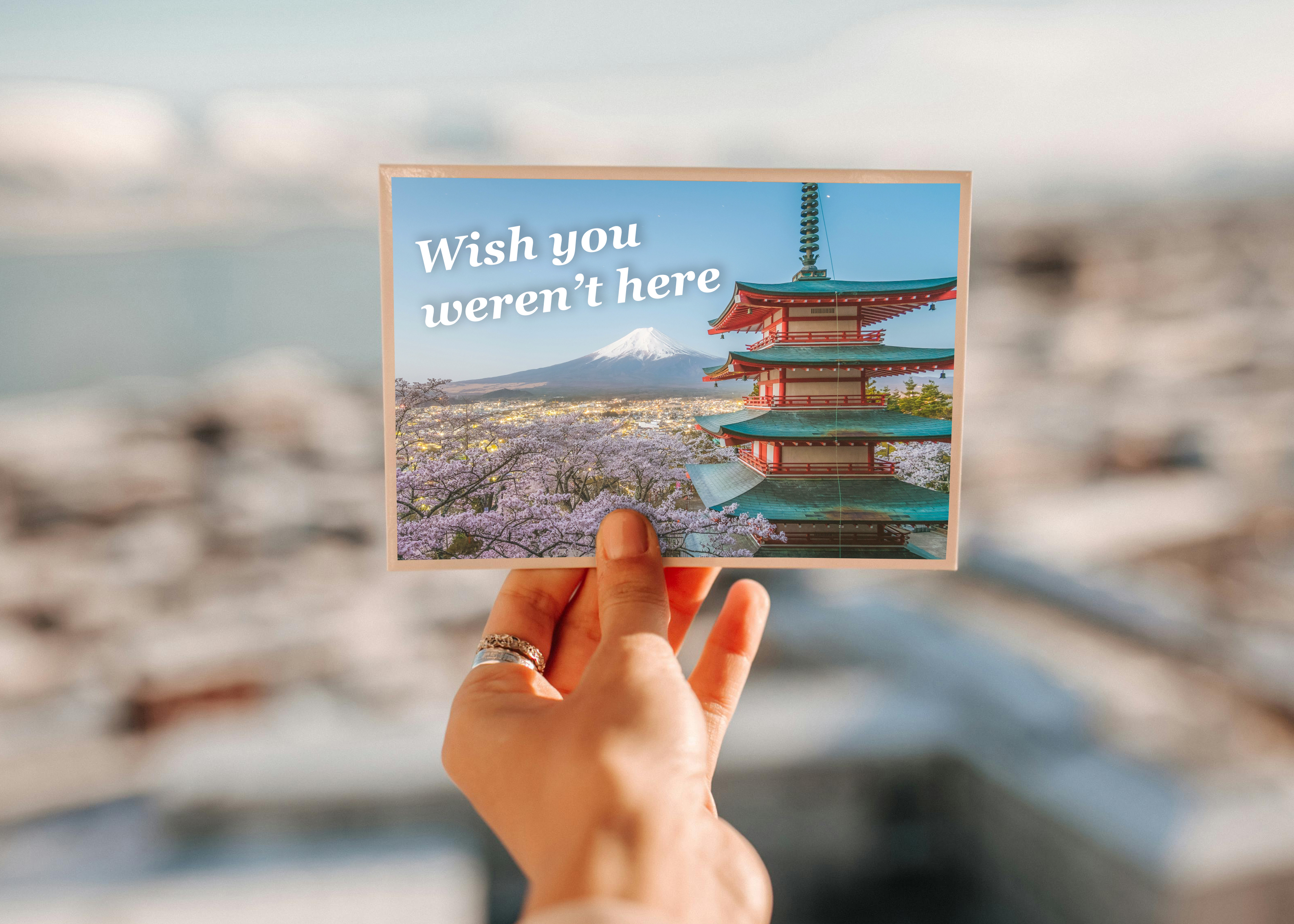
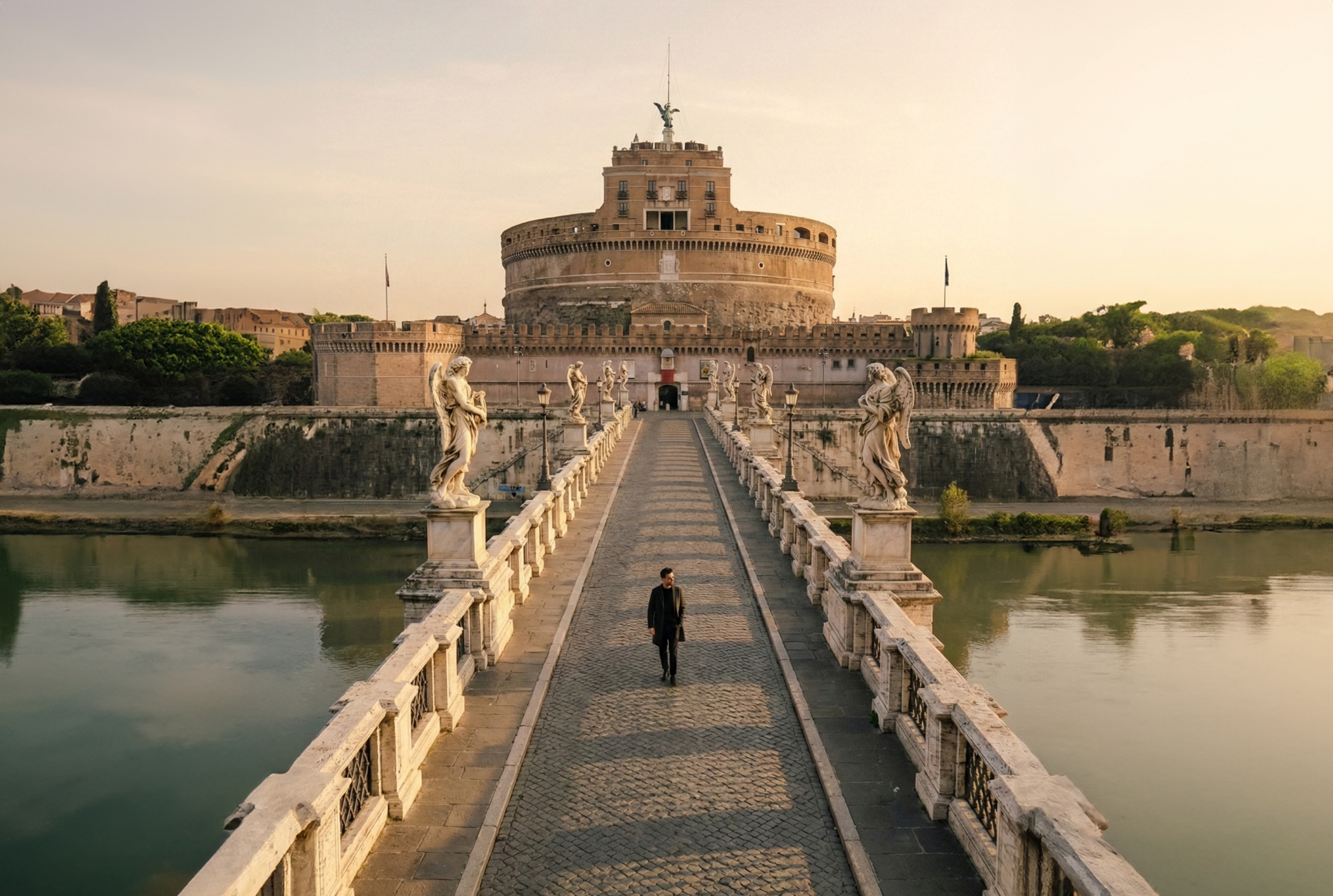
In recent years, travel-related imagery has become one of the most dominant categories across social platforms, circulating hundreds of millions of times and shaping expectations well before any physical journey begins. Certain locations — viewpoints, streets, landscapes — repeat so frequently that they feel familiar long before they are experienced.
This visual saturation has measurable consequences. Cities like Venice and Barcelona have introduced visitor controls, while natural landmarks such as Machu Picchu now operate under strict daily caps. These measures are not responses to curiosity alone, but to concentrated desire: the mass convergence of people toward the same recognisable images.
Travel is no longer about discovery
Tourism research increasingly points to social media exposure as a powerful accelerator of these flows. Destinations that trend visually experience sudden and disproportionate spikes in visitation, often disconnected from infrastructure, seasonality, or local capacity. Travel, in this context, no longer begins with movement, but with recognition. We don’t arrive to discover; we arrive to confirm what we already know how to see.
For years, photography functioned as memory: an imperfect, subjective trace of having been somewhere. But as images began to circulate faster than experiences, their role shifted. Photographs became currency, validation, proof. The image stopped being a consequence of travel and became its objective.


We learned to travel backwards, not from place to image, but from image to place.
Overtourism is often framed as a problem of volume, but its real impact lies in concentration. The issue is not how many people travel, but how many are drawn to the same frame, at the same time, for the same reason. A handful of viewpoints, streets and moments absorb the majority of attention, while vast surrounding territories remain largely unseen.
What results is not exploration, but choreography. Waiting, framing, capturing, leaving. Presence is reduced to participation in a visual script that already exists.
Seeing is believing
It is within this already fragile ecosystem that synthography — the production of AI-generated images without physical presence — enters the conversation. And it is here that many instinctively draw a moral line: this is fake. Yet that reaction risks missing the deeper continuity.
Photography has always been an act of construction. Framing excludes more than it includes. Light is selected, moments are chosen, reality is edited. The difference now is not that images are suddenly artificial, but that the artifice has become explicit.

Synthography does not fabricate desire. It exposes it.
Its discomfort comes from the way it short-circuits the ritual. If an image of Cappadocia at sunrise can exist without the balloon ride, the crowd, the cost or the carbon footprint, the question becomes unavoidable: what exactly was the journey for? Not whether the image is real or fake, but whether the experience it replaces had already become performative.
For some, the image partially satisfies the urge. The longing softens. The fantasy is consumed without displacement. For others, the opposite occurs: the synthetic image sharpens desire, revealing how much physical presence still matters. In both cases, something essential is revealed — not about technology, but about intention.
The journey must justify itself
What do we actually seek when we travel?
Is it presence — the unpredictability of being somewhere unfamiliar, the sensory friction, the unrepeatable mistakes? Or is it alignment — the reassurance of placing ourselves inside an image we already recognise?

Critics often frame synthography as a threat to “real” travel, but it may function more accurately as a mirror. It reflects a culture that learned to desire places visually long before arriving at them. A culture in which proof often outweighs experience, and documentation replaces memory.
This does not signal the end of travel, nor the loss of value in physical presence. If anything, the opposite may be true. As images become easier to produce, the meaning of being somewhere may finally be forced to change. What cannot be generated — time, effort, discomfort, human encounter — may regain importance.
In that sense, synthography could paradoxically clear space for a different kind of travel. Slower. Less extractive. Less obsessed with trophies. A form of movement where the image is no longer the prize, but a by-product, or even optional.
The question, then, is not whether synthetic images are real or fake. It is whether we are ready to admit how much of contemporary travel has already drifted away from lived experience. Whether we travelled to be there, or simply to be seen there.
If the image can exist without the journey, perhaps the journey must finally justify itself again.