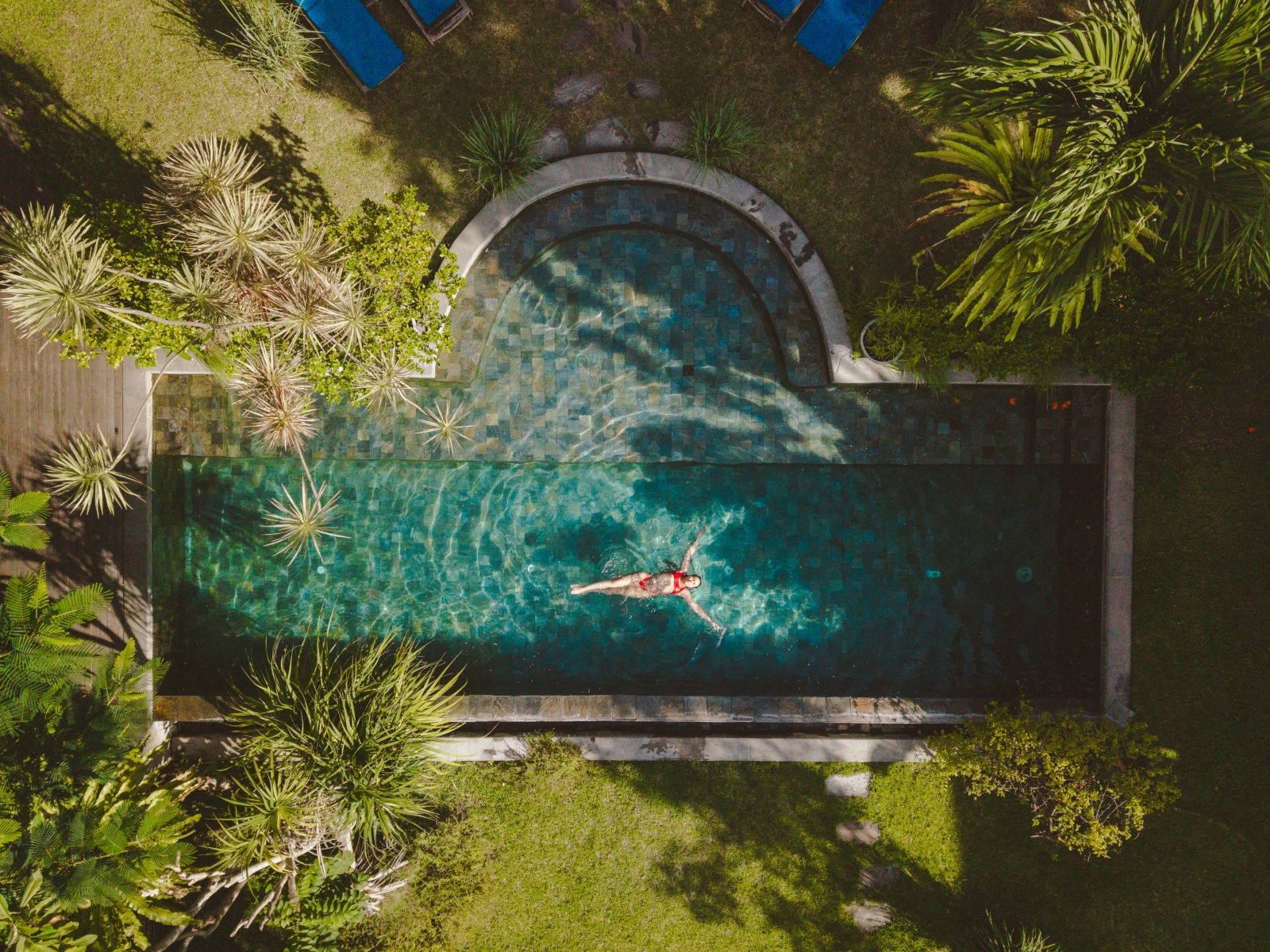
There are many different factors that contribute to a hotel’s reputation and value. While it was previously just about design, hospitality and amenities, now sustainable operations, staff wellbeing, inclusivity and local community impact are gaining importance.
Recent updates from luxury hotel groups and resorts around the world reflect this shift. Keep reading to discover more about the sustainable certifications at Atlantis Dubai and St. Tropez’s Villa Cosy. Six Senses priorities women’s health, assessing the full cycle through to menopause, and new standards have been brought in to reduce the carbon footprint of F&B in the global hotel industry.
Villa Cosy Hotel & Spa: First property in St. Tropez to earn Green Key Certification
Villa Cosy Hotel & Spa has achieved Green Key certification alongside Atout France’s Destination of Excellence label.
St. Tropez is historically synonymous with high-footprint luxury. However, Villa Cosy’s certification signals a shift in European resort hubs. It’s evidence that 5-star hospitality can integrate circular waste systems and fair labour without losing its luxury appeal.

Standout eco-friendly features include a certified organic on-site vineyard, a weekly food-composting partnership with Les Alchimistes, a 100% electric vehicle fleet, and zero single-use plastics across guest amenities.
Crucially, the property relies primarily on year-round, permanent employment contracts to support local economic stability and retain hospitality talent. The focus on permanent staffing over seasonal exploitation is an essential metric of social sustainability that often gets overlooked.
Six Senses launches “The Way of a Woman” lifecycle wellbeing retreats
Wellness hospitality is moving away from generic pampering and standardised detox packages toward clinical, demographic-specific longevity programming. Six Senses is one of the luxury brands leading the evolution. It recently launched a new retreat, designed around female physiology. The program targets nervous system regulation, hormonal transitions, and lifecycle health, from cycles, to fertility, perimenopause and menopause.

Women’s wellbeing has been notoriously overlooked and underfunded. However, Six Senses’s The Yin Way Retreat – The Way of a Woman responds to the Global Wellness Institute’s call to move away from wellness protocols derived primarily from male health data.
It highlights how luxury resorts are reframing aging and hormonal transitions — topics long ignored by commercial travel — as deep, high-value experiential journeys. The retreat is designed around Traditional Chinese Medicine (TCM) and led by Integrative Health Expert Hati S. Malinova and will debut at Six Senses Kanuhura, Maldives, and Six Senses Kyoto, Japan.
Global Sustainable Tourism Council (GSTC) introduces 30% plant-based menu standard
Food procurement accounts for over 60% of a hotel’s F&B carbon footprint, with animal-derived ingredients contributing 70% of those emissions. To reduce this, the GSTC has issued a new global benchmark.

It requires certified hotels, restaurants, and operators to make at least 30% of their core menu offerings plant-based or “predominantly plant-based” (under 5% animal product weight).
The rule applies progressively to over 2,000 GSTC-certified properties during their upcoming audit and recertification cycles. This is a major policy milestone, moving plant-forward dining from an opt-in trend or luxury PR feature into a measurable, audited baseline for sustainable operations.
For hospitality brands, it indicates how F&B is becoming a primary operational lever for Scope 3 carbon reduction.
Atlantis Dubai secures triple sustainability accreditations across resorts
Atlantis Dubai recently retained EarthCheck Gold and Silver certifications, alongside Dubai Sustainable Tourism Gold Stamps and FTG Verified Responsible Hospitality status.
Operational stats report an 8.6% to 20.2% drop in energy consumption, with over 2,000 solar panels generating 1.8M kWh annually. On-site water bottling has additionally eliminated 3.6 million plastic bottles per year. Furthermore, over US$500,000 has been invested directly into regional marine conservation via the Atlantis Atlas Project.

Mega-resorts and giga-developments are often criticised for inherently high resource footprints. However, Atlantis Dubai’s multi-accreditation push reflects how massive luxury properties use third-party verification to improve high-volume operations.
Atlantis Dubai was the first resort in the Middle East to achieve IBCCES Certified Autism Centre accreditation in 2022. More than 90% of its guest-facing staff are trained in autism and sensory awareness.
Uniqode releases “Sustainability in Hospitality” playbook
According to Uniquode’s recent report, eco-certified properties are now outperforming uncertified peers with a 24.5% higher booking share, a 12% increase in Average Daily Rate (ADR), and 23% higher occupancy. These findings prove that sustainability has officially crossed over from a CSR/reputation line-item to a direct RevPAR driver.
The report warns of a major documentation gap. 67% of travellers reported encountering greenwashing/misleading claims at hotels, driving booking platforms and guests to demand audited metrics over vague promises.
The report advises replacing self-reported claims with standardised frameworks, specifically HCMI (carbon), HWMI (water), and HWMM (waste). By embedding verifiable metric frameworks and clear digital communications into operations, hotels can capture that rate premium while insulating the brand against greenwashing backlash.
Read more similar stories


Support independent, honest journalism
At STERNA, we believe travel journalism should provoke new thought, inspire positive change, and highlight the purpose-led and sustainable businesses protecting our planet and local communities.
True, independent storytelling takes intention and deep research. We operate without clickbait, sensationalism, or corporate bias.
By contributing to STERNA, you directly fund independent journalism and help us bring more stories of positive environmental and cultural impact to light.
If our work has inspired you, consider supporting our mission.
Contribute to support independent journalism.
At STERNA, we believe travel journalism should provoke new thought, inspire positive change, and highlight the purpose-led and sustainable businesses protecting our planet and local communities.
True, independent storytelling takes intention and deep research. We operate without clickbait, sensationalism, or corporate bias.
By contributing to STERNA, you directly fund independent journalism and help us bring more stories of positive environmental and cultural impact to light.
If our work has inspired you, consider supporting our mission.
Contribute to support independent journalism.
Choose an amount:
Or enter a custom amount:
Your contribution is appreciated, and helps to keep our site ad-free.
Your support is appreciated, and helps to keep our site ad-free.