
For several decades, Bali has been the go-to paradise destination. But over time, it has become more about status. As a result, the tourism industry profits from the myth of Bali, not the reality of it, while local communities pay the price.
The influx of tourists has been growing steadily for decades, but it is now reaching breaking point. Overtourism has left water scarce and waste management systems overwhelmed. On top of environmental degradation, there’s growing friction between locals and tourists, with the latter often behaving insensitively and disrespecting local traditions and way of life. Meanwhile, developers continue to capitalise on the cheaper economy, extracting immense profits from a once utopic island and draining the very beauty that drew people there in the first place.
STERNA was recently contacted by a luxury development company building another high-end villa resort in southern Bali. On the surface, it promotes itself as being sustainable and beneficial for the community. However, when it came to answering specific interview questions – an interview they had originally requested – the founders refused to respond on the values they themselves promote on their company website.
This developer isn’t an anomaly. It’s a symptom of 50 years of an extractive tourism model.

The rise of tourism in Bali
While the dramatic uptick of tourists today is perpetuated by social media, the draw of the island started long before the internet. It was the 1970s when Australia’s obsession with Bali kicked off. After Australian surfers came the European backpackers and North Americans seeking the “hippie trail”.
In an 50-year-old broadcast recently reshared by ABC Australia, a tourist was asked if they thought they were ruining the culture. The tourist replied, “By coming here, you are sort of helping to destroy their way of life. The only thing you can do is just try and live as simply as you can and live as simply as the people here.”

But living like the locals was not in the cards. Kuta Beach, once a quiet, pristine, fishing village, was paved over with high-rise hotels, flashy beach clubs, and nonstop traffic. As Kuta became oversaturated, developers exported the model to other untouched areas. Through the 1980s and 90s, development decentralised outwards, turning neighbouring Legian and Seminyak into bustling global hubs.
Commodified wellness for tourists, loss of sacred land for locals
Soon, the commercialisation of Balinese Hindu spirituality, popularised by the Eat, Pray, Love industrial complex, sparked a secondary wave of wellness tourism. Development pushed inland to Ubud’s jungles to build wellness retreats, creating a highly commodified aesthetic for the influencer era.
Today, as land constraints choke Seminyak and Canggu, the concrete frontier has moved into the sacred cliffs of Uluwatu. The landscape is now defined by premium branded residences and boutique developments – the same market targeting STERNA for publicity.


All this development has taken a toll on the local community. One report reveals that 25% of Bali’s agricultural land has been lost to tourism, while the number of tourists has grown by 330% in the last 25 years. This has impacted every part of local residents’ life.
The crisis has grown so severe that the Balinese government and local communities are pushing back. Strict bans are now implemented on content creators, influencers and digital nomads operating without a work visa. Additionally, a new construction moratorium was put in place earlier this year, pertaining to construction permits for hotels, restaurants, and tourism accommodation on agricultural land.
How to spot a greenwashing developer
Greenwashing is frequently used to make a real estate project look like a philanthropic venture rather than a standard money-making business. The developer that reached out to us is a prime example. It markets its project as responsible luxury, listing sustainability and positive local impact as core brand pillars. Yet, when asked for more information, the founders and PR explicitly refused to answer our questions.
Here is a breakdown of the type of misleading marketing language many developers like this use, versus the truth of the situation.
The “protecting Bali’s land” paradox
The company claims that part of its revenue will be used to support land preservation initiatives elsewhere on the island. This is a classic hidden trade-off. Developers clear one vulnerable area to build concrete, high-density luxury villas with private pools, while framing the project as eco-friendly because they promise to buy a completely different plot elsewhere to leave untouched. You cannot offset the physical destruction of a local ecosystem by protecting a completely separate one.

Vague social metrics
The company highlights its philanthropic efforts like providing access to clean water for a small number of local families. In reality, this is a microscopic drop in the bucket compared to the massive strain a luxury villa resort places on the destination’s notoriously depleted water table.
Public records reveal this developer had to construct a private deep-well water system for their project because the local municipal supply is failing. Drawing directly from Bali’s fragile underground volcanic aquifers while shouting about a handful of donated filters is premium greenwashing.
The offset illusion
Along with the forecast of annual reports to show progress towards carbon neutrality, the companies pledges to offset all construction emissions through carbon credit investments.
Offsetting construction emissions with carbon credits does nothing to change the physical, destructive impact of heavy machinery, concrete pouring, and land clearance. Furthermore, promising future annual reports is a typical mirage tactic. They are asking consumers to trust their future intentions before they have proven any baseline metrics.

No longer falling for a lie
The company is pushing this manufactured narrative hard. It has even put a sustainability director on the board of founders to dress up standard luxury real estate as being a benefit to the local community.
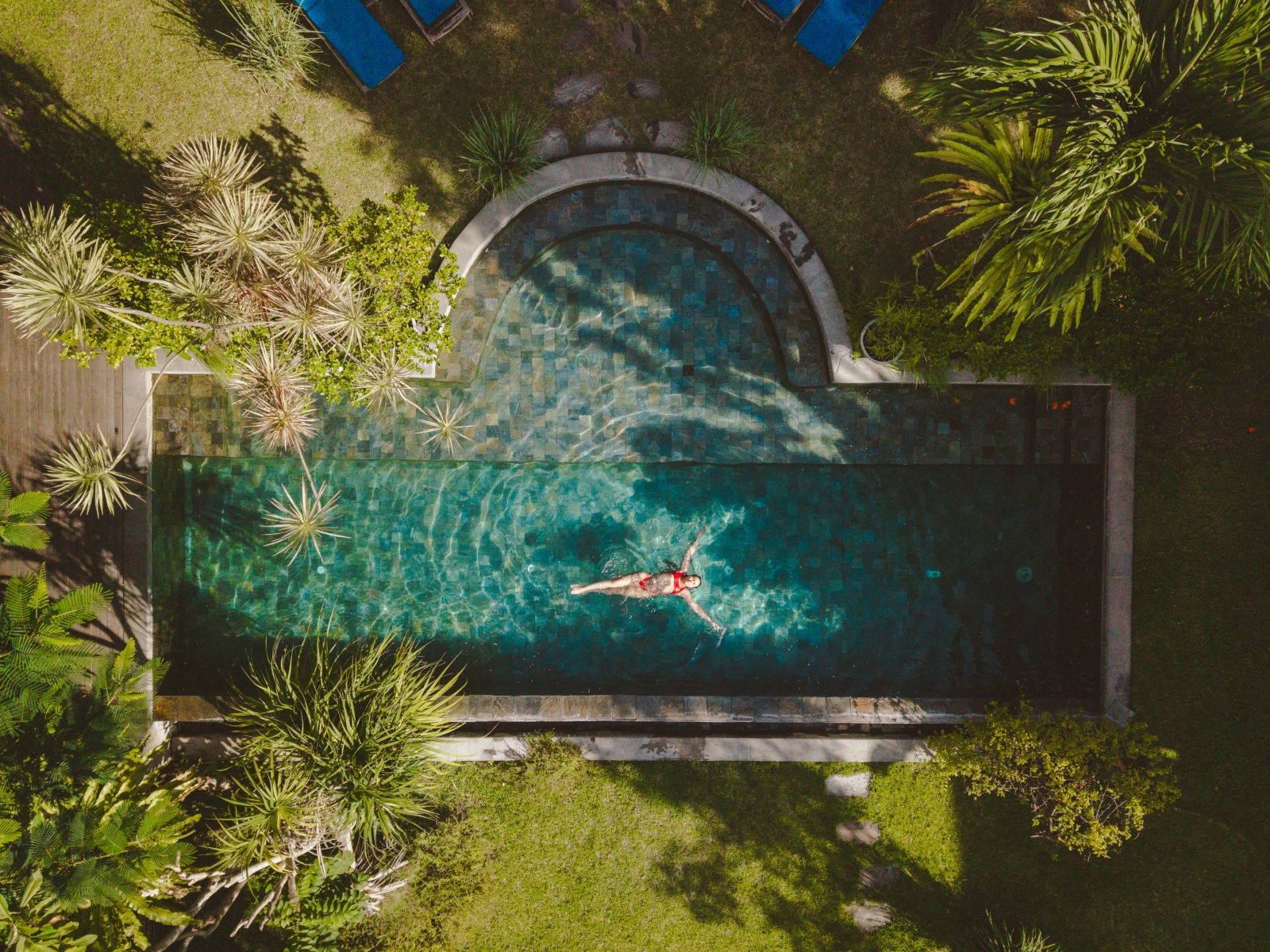
The reality can’t be ignored. Bali is facing a severe water crisis: 65% of the island’s fresh water is consumed by the tourism industry. Hotels and villa resorts with private pools like this are literally drying out local Balinese family wells.
The term ‘eco-tourism’ can no longer be used as a marketing shield. Independent travel journalism requires looking past the PR copy to see who is actually paying the price for luxury. Change is already happening in Europe, with a legislative ban that takes effect in September 2026. The ban will strictly prohibit hospitality brands from making generic environmental claims without verifiable, third-party evidence.
Until similar legal accountability is enforced elsewhere around the world, travellers must look closely at the fine print of resorts. If a luxury developer refuses to answer basic questions about ESG claims they make on their website, they’re not saving the island, they’re simply selling off its remains.
More related stories


Support independent, honest journalism
At STERNA, we believe travel journalism should provoke new thought, inspire positive change, and highlight the purpose-led and sustainable businesses protecting our planet and local communities.
True, independent storytelling takes intention and deep research. We operate without clickbait, sensationalism, or corporate bias.
By contributing to STERNA, you directly fund independent journalism and help us bring more stories of positive environmental and cultural impact to light.
If our work has inspired you, consider supporting our mission.
Contribute to support independent journalism.
At STERNA, we believe travel journalism should provoke new thought, inspire positive change, and highlight the purpose-led and sustainable businesses protecting our planet and local communities.
True, independent storytelling takes intention and deep research. We operate without clickbait, sensationalism, or corporate bias.
By contributing to STERNA, you directly fund independent journalism and help us bring more stories of positive environmental and cultural impact to light.
If our work has inspired you, consider supporting our mission.
Contribute to support independent journalism.
Choose an amount:
Or enter a custom amount:
Your contribution is appreciated, and helps to keep our site ad-free.
Your support is appreciated, and helps to keep our site ad-free.


