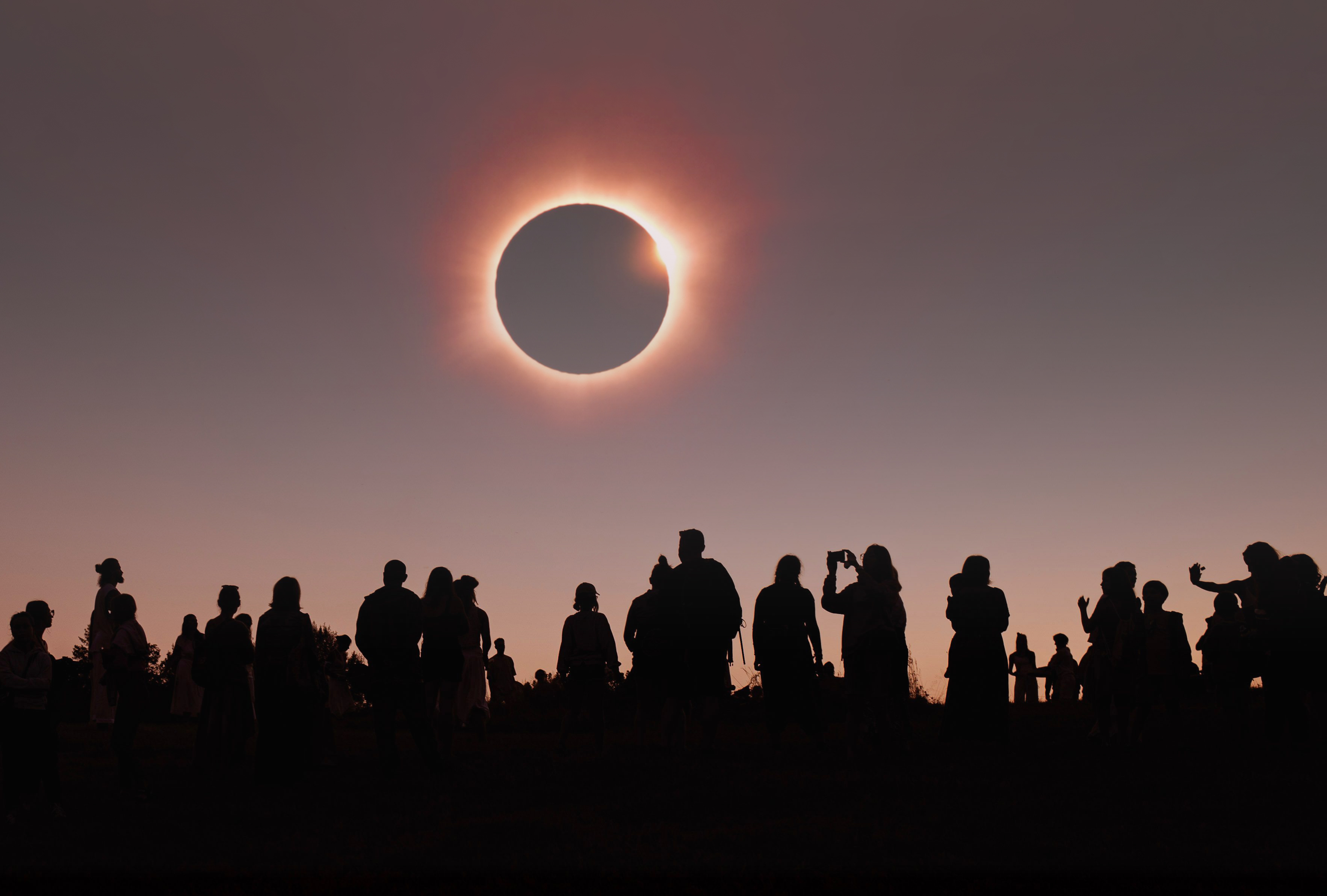
For the first time in years, a solar eclipse will plunge Europe into darkness. As the moon’s shadow sweeps across the North Atlantic, it will block out the sun over the volcanic fjords of Iceland, the rugged coastlines of Spain, and the open waters of the ocean.
The eclipse is fleeting. But the global rush to secure prime viewing spots reflects a broader shift in hospitality – specifically, the rise of astrotourism. While travellers are often attracted to glittering, neon city skylines, the movement sees a trade-in for dark-sky reserves.
Perhaps an antidote to the hyper-connected reality we live in today, for some travellers, the appeal is as much about switching off as it is about looking up and seeing something rare.
Where to watch the August 12th solar eclipse
Spain is emerging as the best place to watch this week’s total solar eclipse, due totality occurring right before sunset when the sun is sitting low on the western horizon. Hotels across the path are preparing with weeklong themed experiences and offers.

For example, the five-star, adults only TRS Ibiza Hotel in Sant Antoni de Portmany is offering special eclipse packages that include a sound healing yoga session and access to the main eclipse event. This will occur on the day of the eclipse at its Gravity Rooftop bar, complete with cocktails and a DJ.
Jumeirah Mallorca takes a slower approach. The clifftop retreat has curated a four-day celebration with events, including astronomy masterclasses led by the Mallorca Astronomy Institute and wellness rituals aligned with the sun. It additionally boasts a curated menu for guests staying in its signature suites, paired with a bespoke mixology. Perched high on the rugged north-west coast, the suites come with private terraces and elevated panoramic views of the Mediterranean and UNESCO Heritage Serra de Tramuntana mountain range.

The totality will also be visible from some of the planet’s other dramatic landscapes across the North Atlantic. Framed against dramatic coastal lava fields, Iceland’s Westfjords and Snæfellsnes Peninsula offer a prime vantage point to witness the eclipse. Meanwhile across Greenland’s fjords, remote Arctic expedition ships like Ocean Albatros, HX Expeditions and AE Expeditions are positioning themselves along the eastern coast to capture an early sighting away from terrestrial light pollution.
Luxury cruise liners from lines like Silversea and Ponant have also chartered targeted sailings in the Atlantic Ocean, positioning ships directly on the centreline for unobstructed, sea-level horizon views.

The rise of astrotourism
When part of a holiday or tour package, recreational astronomy is often led by dedicated amateur astronomers hauling heavy equipment to remote campsites. Today, astrotourism is growing within high-end travel, fuelled by a growing scarcity of true darkness. In fact, the global astrotourism market is predicted to grow between 2025 and 2034 at a CAGR of 12.7%, from a value of $1.18 billion to $3.47 billion. With over 80% of the global population living under light-polluted skies, truly dark skies have become a rare luxury.
The concept of awe may also be part of the appeal behind celestial travel. As Dr Aradhana Khowala, CEO of Aptamind Partners said during the Forbes Travel Guide Summit 2026, “luxury today means moments that bring you to tears and make you forget to reach for your phone. Awe is a perspective reset where your mind is forced to recalibrate. Long live awe and wonder.”

As many writers, poets and philosophers throughout history have reflected on, standing beneath a full sky of stars, planets and galaxies can make us feel small and remind us of our humble place in the universe. The feeling is potentially even more profound today, particularly as we increasingly live with heads bent with our eyes fixed on a tiny screen.
Experiential luxury: Stargazing is no longer a niche pursuit
To meet this demand luxury resorts around the world are expanding their offerings past the sunset hour, building specialised infrastructure to capitalise on night-sky phenomena.
Over in the Maldives, Anantara Kihavah is host to SKY, an overwater observatory featuring a research-grade Meade LX200 telescope. Here, guests sip custom celestial cocktails while guided through the southern skies by a resident SKY Guru. Soneva Fushi & Soneva Jani also feature overwater observatories, where multi-course outdoor dinners are paired with private guided lectures from visiting astrophysicists and astronauts.

In Utah, US, Amangiri is situated deep within the canyon desert of the Colorado Plateau. This remote property curates private nocturnal astronomy sessions, night-sky photography workshops, and star-mapping dinners beneath some of North America’s darkest skies.
Meanwhile La Palma, Canary Islands has strict light-pollution laws. Hotel Hacienda de Abajo is located within a UNESCO Starlight Reserve, benefitting from these laws. It offers guests tailored nocturnal tours of the Roque de los Muchachos Observatory, in addition to partnering with La Isla Bonita tours for guests to access the best observation points across the island. These are just a few examples, but there are many more luxury properties across the entire globe dedicated to celestial observation.
The future of the night sky
Beyond its commercial appeal, astrotourism carries a conservation message. As hotels invest in dark-sky preservation by replacing harsh outdoor lighting with low-impact illumination and supporting local dark-sky designations, they help protect nocturnal ecosystems and biodiversity.
Solar eclipses may be rare, momentary phenomena, but our hunger to reconnect with the universe is deeper, and more permanent.
Support independent, honest journalism
At STERNA, we believe travel journalism should provoke new thought, inspire positive change, and highlight the purpose-led and sustainable businesses protecting our planet and local communities.
True, independent storytelling takes intention and deep research. We operate without clickbait, sensationalism, or corporate bias.
By contributing to STERNA, you directly fund independent journalism and help us bring more stories of positive environmental and cultural impact to light.
If our work has inspired you, consider supporting our mission.
Contribute to support independent journalism.
At STERNA, we believe travel journalism should provoke new thought, inspire positive change, and highlight the purpose-led and sustainable businesses protecting our planet and local communities.
True, independent storytelling takes intention and deep research. We operate without clickbait, sensationalism, or corporate bias.
By contributing to STERNA, you directly fund independent journalism and help us bring more stories of positive environmental and cultural impact to light.
If our work has inspired you, consider supporting our mission.
Contribute to support independent journalism.
Choose an amount:
Or enter a custom amount:
Your contribution is appreciated, and helps to keep our site ad-free.
Your support is appreciated, and helps to keep our site ad-free.