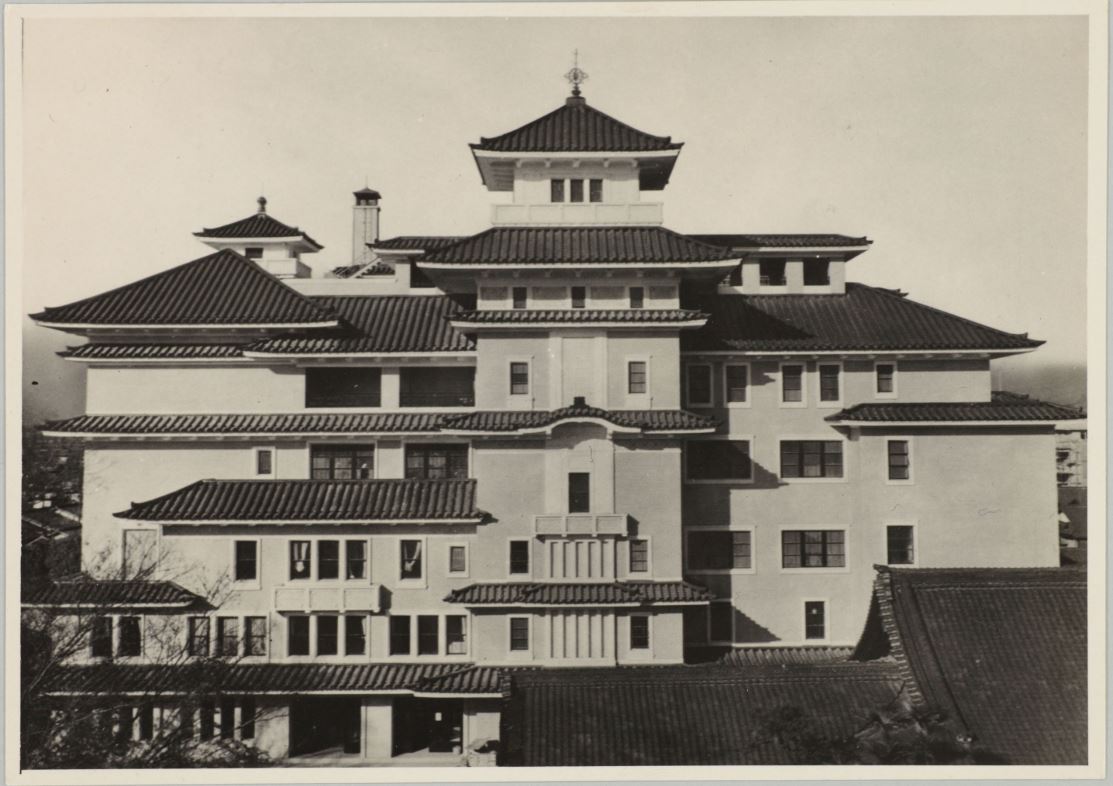
Opening in 2026, The Imperial Hotel, Kyoto will inhabit a restored 1936 theatre. Honouring 135 years of storied excellence, this hotel debuts the brand’s first new opening in three decades.
Through contributions from the local geiko, maiko and teahouse associations, the building was originally designed for theatrical performances. Later down the line, it additionally served as a venue for movies, dance halls, concerts and other events later down the line. Now, it is a nationally registered cultural property.
The design of the past that prevails today
The theatre, Yasaka Kaikan was originally designed by Tokusaburo Kimura. The transformation, led by Obayashi Corporation, retained 16,387 original tiles using ikedori, a traditional Japanese technique for removing materials without damage.
Embracing an act of architectural reverence, preservation and cultural continuity within Japan’s luxury landscape, the copper-tiled roofs and terracotta reliefs were crafted by artisans who also worked on Frank Lloyd Wright’s Tokyo Imperial Hotel.

One standout feature is the Preservation Wing guestrooms, which retain original beams and window frames, with private balconies overlooking the Gion Kobu Kaburenjo theatre, where guests can hear shamisen music drifting through the air.
Meanwhile, the Imperial Suite is surrounded by twin terraces that open to the north and east, and crowned by a symbolic gazebo, a cherished icon of Yasaka Kaikan.

The Imperial Hotel will offer 55 rooms, along with a spa, pool, fitness centre, restaurant, and bar. It adheres to Kyoto’s strict zoning codes, supports local artisans, and promotes community-based travel experiences.
Interior design is being led by Mr. Tomoyuki Sakakida with New Material Research Laboratory, known for its reverent approach to traditional Japanese materials and craftsmanship.

The property invites guests to engage with a heritage shaped by generations of cultural expression. Guests won’t just check in – they’ll inhabit a living tradition, where every beam and tile carries the quiet weight of Kyoto’s cultural soul.